a to z challenge

Self-Publishing: F is for…Formatting

FF is for…Formatting: Have you ever seen a book where the formatting just seemed off? there was one too many spaces between words or a weird paragraph indent? A bad formatting  can turn readers off.

As I was preparing this post, Elizabeth Briggs (author of the CHASING THE DREAM sexy NA series) tweeted:

Bad formatting can happen to anyone but when you have control over the process (when you are self-pubbing, you are the one pushing the “publish” button), you really need to make sure it’s not all over the place.

In addition, once more you need to decide what format you’re going for: is it ebook? print? Are you going to publish on Smashwords? Which portal are you going to use?

For ONE TWO THREE, I used Caitlin Greer (she’s awesome, just saying) and she formatted the books for me in those formats:

  • .pdf,
  •  .mobi (Kindle)
  • .epub (every other ereader)
  • and final Word .doc.

The process was very easy, Cait sent me a list of documents she would need and told me she would need 3 to 5 days to complete the job at the time I “booked” her. She also did an ARC version and a final version. How did I find Cait? Thanks to the recommendation of Jennifer Ellision (Author of  THREATS OF SKY AND SEA series)

There are a lot of do-your-own formatting resources that you can use. As I’m trying to save money and have more time, I am learning how to format both print and e books.  I think this decision here should come from your business plan. You should know how much time you approximately have, if you usually are good with formatting, how much money you would be spending and so on and so on.

Articles or resources about formatting:

 Join me on tomorrow for G…Goodreads
selfpub logo

a to z challenge

Self-Publishing: E is for…Editing

EE is for…Editing: Editing is very important, I think it really helps set your book apart and does justice to the readers. I find it especially crucial for me because English isn’t my mother tongue (even though I do end up writing more easily in English than in French but that would be another blog post).

Before deciding on self-publishing ONE TWO THREE, it went through several rounds of beta reading and critiquing. However, I failed to tackle one major aspect most readers commented about and which I should have done then. This mainly explain why I went through so many editors. Once I made that big, big, biiiiiig change which was “developmental editing” and which I didn’t anticipate, I then still had to go through line editing and copy editing. And since I didn’t anticipate it, I didn’t book the editors I needed and I had that self-made deadline.

On the other hand, ONE DREAM ONLY when through two rounds with the same editor (copy editing and proofreading). Which, hmmm, let’s face it makes so much more sense.

When it comes to editing, freelance editors usually have several packages: developmental editing, line editing, content editing, copy-editing…some offer proofreading as well.

From now on, I will not use developmental editing. Why? (1) I became a better writer (I’ve now written fours books, one novelette…and I’ve beta read and critiqued some amazing manuscripts), (2) I learned how to adapt comments from beta readers and CPs much better hence my manuscripts are now stronger from the get-go.

I will use copy editing and proofreading.

How do you choose your editor? In my view, you should either use a copy editor you have “seen” in action (i.e. read a book you really liked in the same genre as yours, and check who the editor was, most authors will thank the people they worked with in the acknowledgements), and/or make sure you can somehow check credentials. In addition, don’t hesitate to make use of the “sample” most editors offer (they edit a few pages of your work so you can see how they work).

List of editors (in no particular order – some offer developmental editing)

 Join me tomorrow for F…Formatting

selfpub logo

a to z challenge, Uncategorized

Self-Publishing: D is for…Design (cover design)

DD is for…Design (cover Design): Having an eye-catching cover is oh so important. I think when you’re self-publishing, it really helps to also show that you take it seriously…and while the selfpub stigma is less important than before, a cover is the first glance at your work. Letting it go to waste…is well, a waste.

My cover designer for ONE TWO THREE and ONE DREAM ONLY was Derek Murphy. He offers different packages, and a bit more expensive than others, but I did love working with him…and he has now a lot and I mean a lot of free info for authors, also on how to design covers and templates and everything.

The process took several steps:

  • You first should know if you want to go for ebook and print or just ebook.
  • Sharing as much info about the book as possible
  • Sending a few pictures I had in mind
  • Him sending me a few possible covers
  • Me choosing the one I liked the most (with the help of some lovely friends and writers)) and then amending it also with the help of  Derek

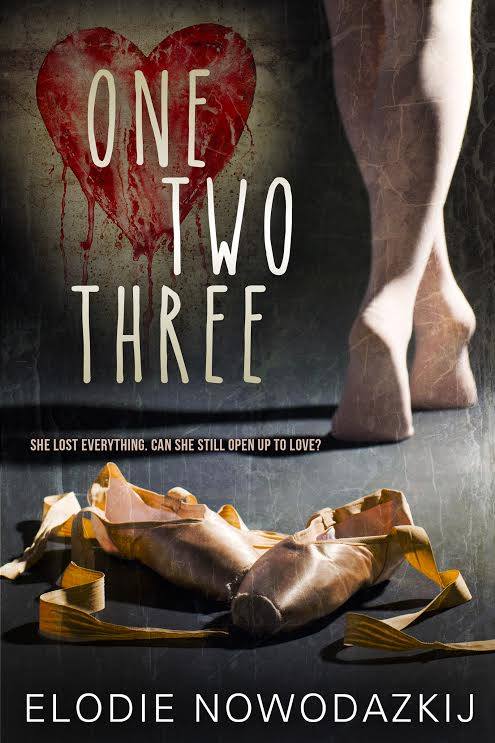
I absolutely loved my covers…Here’s the one Derek created for ONE TWO THREE which I published on June 26th, 2014.

Official cover

For the covers, we used stockphotos. One thing to keep in mind is that you could also use photographer stock photos which then are used only once (check out those photos: love them) or use your own…

For my series, the heart will be “the” image that links all the books…As mentioned in a previous post, I am currently learning how to use Photoshop…and it’s been tons of fun.

List of providers (based on covers I loved from other self-pub authors)

Round up of articles on cover design

 Join me on Monday for E…Editing, Copy-editing, Line-editing

selfpub logo

a to z challenge

Self-Publishing: A is for…Advertising

A[1]A is for…Advertising

Personally, I had dreamed that when ONE TWO THREE (the first book I self-published) came out, it would be a success (otherwise: why oh why would I have decided to self-publish? :P). Of course, I also knew about the importance of marketing and promotion and yes I knew that self-publishing is a marathon not a race. There are more and more self-published books being published each year (more statistics in later posts) and standing out is not the easiest thing to do.

Here’s what I learned and a few things I’ll consider:

  • Netgalley: this worked really well for me, gathered quite a few reviews on several websites and started spreading the word. In addition, I’m in touch with some of the bloggers who loved my book and I am so forever thankful for them. Some people join co-ops, I used Patchwork Press
  • Facebook: I promoted my Facebook page way before publication, yes I got a lot of likes but for the amount spent, the results (reader engagement, sales)  were basically non-existent. On the other hand, the Facebook party I organized for ONE DREAM ONLY gave me great results in regards connecting with readership. Thinking about doing something totally different with Facebook when it comes to promotion from now on.
  • Blog tour with reviews: Another way to get the book in front of readers. I didn’t see a rise in sales though at that time.
  • Cover reveal: I loved doing a cover reveal – advertising wise, at the time, it really worked. I used the services offered by Giselle from Xpresso Book Tours…I think the blurb really caught the attention of readers at the time.
  • Goodreads giveaway: While I think having a Goodreads giveaway is another way to spread the word, and gather the attention of readers, I will not have 3 books at one time there but rather one book and maybe do 2 giveaways (one before publication and one a year after publication or when another book just came out)
  • Goodies (postcards, bookmarks…): I only did this with ONE DREAM ONLY and did not use those to their full advantage, so while my experience is a fail with those, I might use them differently next time.

Things I will try next:

  • Timing: There was too much time between the cover reveal and putting up my book either for sale or for review. People tend to forget especially when there are lots of wonderful books coming out.
  • Facebook group: I will create a FB group where it’s easier to connect directly with readers (I’ve seen more and more of those and the direct connection with the readers is very nice)
  • Bookbub, Freebooksy, ENT…I am going to experience much more with advertising via those lists.
  • Make sure my newsletter is more visible
  • Create new content only for my newsletter subscribers.
  • Try to cross-promote with other authors
  • Use Instagram more maybe do a cover reveal on it first?
  • Use goodies to connect with the readers—send postcards and bookmarks to those who asked or pre-order or post pictures of themselves reading my book on social media. Do something fun with those goodies 😛

Interesting articles on the topic of advertising/marketing for authors:

selfpub logo